
Steamed vegetables are one of the easiest ways to add more colorful, nutrient-rich foods to your plate. And when prepared with the right seasonings and sauces, they can be anything but boring!
If you are trying to reduce or eliminate added oil from your diet, you may wonder how to create the rich, satisfying flavors you love. The good news is that herbs, spices, citrus, vinegars, and simple homemade sauces can transform a pan of steamed vegetables into something truly delicious.
Here are some of our favorite tips for steaming vegetables and creating flavorful, oil-free sauces you can enjoy all week long.
The Art of Steaming Vegetables
Steaming vegetables is wonderfully simple, especially if you have a good steamer basket or steaming pan. One of my favorite kitchen tools is an inexpensive large nonstick skillet fitted with a stainless-steel steaming basket. It may not be fancy, but it is one of the most versatile pans in my kitchen.
Every few days, I steam a large batch of mixed vegetables, add a flavorful sauce, and refrigerate them to enjoy with several meals. It makes healthy eating during a busy week so much easier.
The secret to perfectly steamed vegetables is remembering that different vegetables require different cooking times.
Begin by washing and cutting your vegetables into medium-sized pieces. One of my favorite combinations is:
- Mushrooms
- Onions
- Carrots
- Brussels sprouts
- Broccoli
- Green beans
For variety, try zucchini, yellow squash, celery, parsnips, turnips, rutabaga, sweet potatoes, kohlrabi, or just about any vegetable you enjoy.
You can also combine fresh and frozen vegetables. Just remember that larger frozen pieces may take a little longer to become tender.
How to Steam Them
Add about 2 inches of water to your pan and place the steamer basket inside.
Start with the densest vegetables, such as Brussels sprouts, onions, celery, rutabaga, and sweet potatoes. Set the heat to medium-high. Once the water begins producing steam, cover and cook for about 4 minutes.
Next, add medium-density vegetables, such as carrots, mushrooms, turnips, and parsnips. Steam for another 2 minutes.
Finally, add quick-cooking vegetables, such as broccoli, zucchini, yellow squash, and green beans. Continue steaming for approximately 2–4 minutes, checking frequently for tenderness.
The goal is vegetables that are tender while still retaining their color and a pleasant bite. Avoid overcooking them.
And don’t throw away that steaming liquid! Once the vegetables are finished, carefully drain the remaining water and save it. It has picked up wonderful vegetable flavor and can be refrigerated and used as a base for soups, sauces, or water-sautéing other vegetables.
Try our Flavorful Steamed Veggies recipe for an easy place to begin.
Now for the Fun Part: The Sauce!
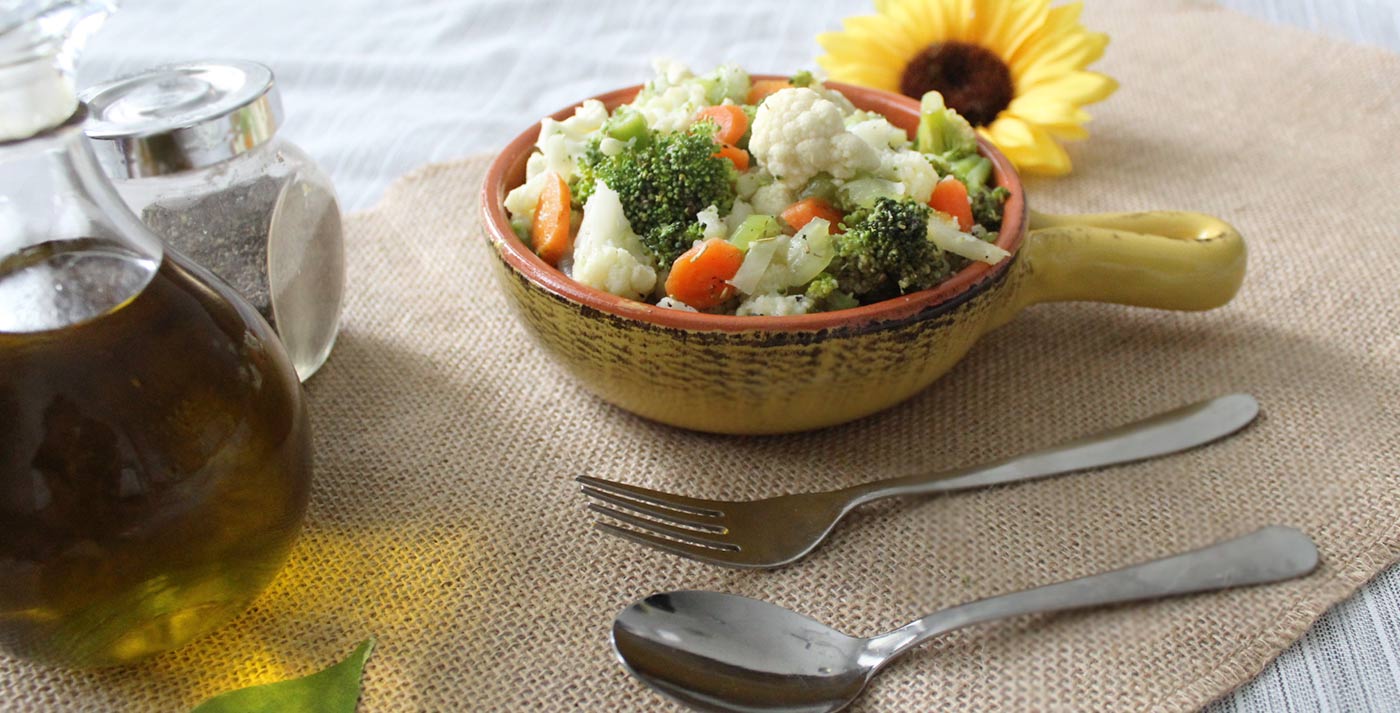
Flavorful Steamed Veggies
I use one simple sauce as a starting point and then change the herbs, spices, and seasonings depending on what sounds good that day.
This is one of the best tricks for eating more vegetables: the vegetables may stay the same, but the flavors don’t have to!
Basic Oil-Free Sauce
After steaming your vegetables, remove the steamer basket and return the warm pan to the burner.
For a basic sauce, combine:
- 3 tablespoons tamari or soy sauce
- 2 cups reserved steaming liquid or unsalted vegetable broth
- 1–2 tablespoons of a sweet or flavorful ingredient, such as maple syrup, molasses, sweet chili sauce, ketchup, or barbecue sauce
Adjust the amount of liquid according to how many vegetables you have prepared. As a general guideline, plan on approximately ½ cup sauce for every 2 cups of vegetables.
From here, you can take your vegetables around the world!
Italian
Add:
- ¼ cup tomato or pasta sauce
- 1–3 cloves minced garlic
- 1–3 teaspoons Italian seasoning
- 1 teaspoon dried basil
- Red pepper flakes, if desired
A little fresh lemon juice and zest are especially delicious with these flavors.
Indian
Before adding the liquid ingredients, dry-toast the following spices in the clean pan for about 1 minute, stirring so they don’t burn:
- 1 teaspoon garam masala or curry powder
- 1 teaspoon ground coriander
- ¼ teaspoon turmeric
Then add the basic sauce ingredients. For extra heat, add a pinch of cayenne pepper.
Tex-Mex
Add:
- 1–2 cloves minced garlic
- 1 teaspoon chili powder
- 2 tablespoons tomato sauce or salsa
- A pinch of cumin
- Cayenne pepper to taste
Try adding corn kernels to your vegetable mixture during the final few minutes of steaming. A squeeze of fresh lime juice at the end brightens all those wonderful flavors.
Chinese-Inspired
For a mild sauce, add:
- 1–2 cloves minced garlic
- 1 teaspoon freshly grated ginger
- ¼ teaspoon Chinese five-spice powder, or to taste
For some heat, add about 1 teaspoon chili-garlic paste.
Fresh orange juice and a little orange zest make a lovely addition.
Korean-Inspired
For a savory, sweet, and spicy sauce, add:
- 2 teaspoons gochujang
- 1 teaspoon freshly grated ginger
- 1–2 cloves minced garlic
Adjust the amount of gochujang according to your preferred level of heat.
Thai-Inspired
For this creamy variation, reduce the reserved steaming liquid to ½ cup and add:
- 1½ cups unsweetened plant-based milk
- 1 teaspoon pure coconut extract
- 1–2 cloves minced garlic
- 1 teaspoon freshly grated ginger
- 1–2 teaspoons peanut butter
- 1 tablespoon sweet chili sauce
- 1 tablespoon Thai curry paste
- 1 teaspoon ground coriander
- 2 teaspoons dried basil
Since the sweet chili sauce already adds sweetness, you can omit the sweetener from the basic sauce.
For more heat, add chili-garlic paste to taste, beginning with about 1 teaspoon.
Brighten Your Sauce with Citrus or Vinegar
Sometimes the simplest addition makes the biggest difference.
Try adding about a tablespoon of freshly squeezed lemon, lime, or orange juice, along with a little zest. Citrus can be added to the basic sauce or incorporated into one of the variations above.
Some favorite pairings include:
Lemon + Italian
Lime + Tex-Mex
Orange + Chinese-inspired
Vinegars are another easy way to add depth without oil. Try a few teaspoons of plain or flavored balsamic vinegar for a sweet-tart note. Apple cider vinegar and rice vinegar are also wonderful options.
Start with a small amount, taste, and adjust until the balance is just right.
Thicken and Finish Your Sauce
Once you’ve chosen your flavors, bring the sauce to a gentle simmer over medium-high heat.
In a small bowl, whisk together:
- 1 heaping teaspoon cornstarch or arrowroot powder
- 2 tablespoons water
Slowly stir the mixture into the simmering sauce and continue stirring until the sauce thickens.
Add your steamed vegetables back to the pan and gently toss until everything is beautifully coated.
Make It Your Own
Think of these sauces as starting points rather than strict recipes. Experiment with different herbs and spices. Try another vinegar. Add fresh citrus. Increase the garlic. Make it sweet, savory, tangy, spicy—or a little of everything!
The key is to start small, taste as you go, and have fun creating flavors you love.
Choosing to cook with little or no added oil doesn’t mean giving up delicious food. With a colorful assortment of vegetables and a pantry filled with herbs, spices, citrus, and other flavorful ingredients, a simple pan of steamed vegetables can become a satisfying dish you’ll look forward to eating.
So get creative, explore new combinations, and most of all—enjoy your veggies!
~M for the Veggie Fest Team